





An RX door is part of the shielding
In a radiology room, the door is not a simple closure. It is part of the protective barrier, like the shielded walls and ceiling. If the door does not ensure the same protection as the wall it is set into, the room’s whole shielding is compromised.
That’s why choosing a lead-lined X-ray door must be set already at the design stage, together with those in charge of radiation protection. In this guide we look at what to assess: required protection, opening type, sealing, viewing panels, automation, and the most common spec errors.
Where lead-lined X-ray doors are needed
Lead-lined doors are installed in all areas where ionizing radiation is used:
- Conventional radiology and diagnostic imaging
- CT (computed tomography)
- Mammography
- Angiography and hemodynamics
- Hybrid rooms, where surgery and imaging coexist in the same area
- Nuclear medicine and rooms with radioactive sources
- Dental and veterinary radiology
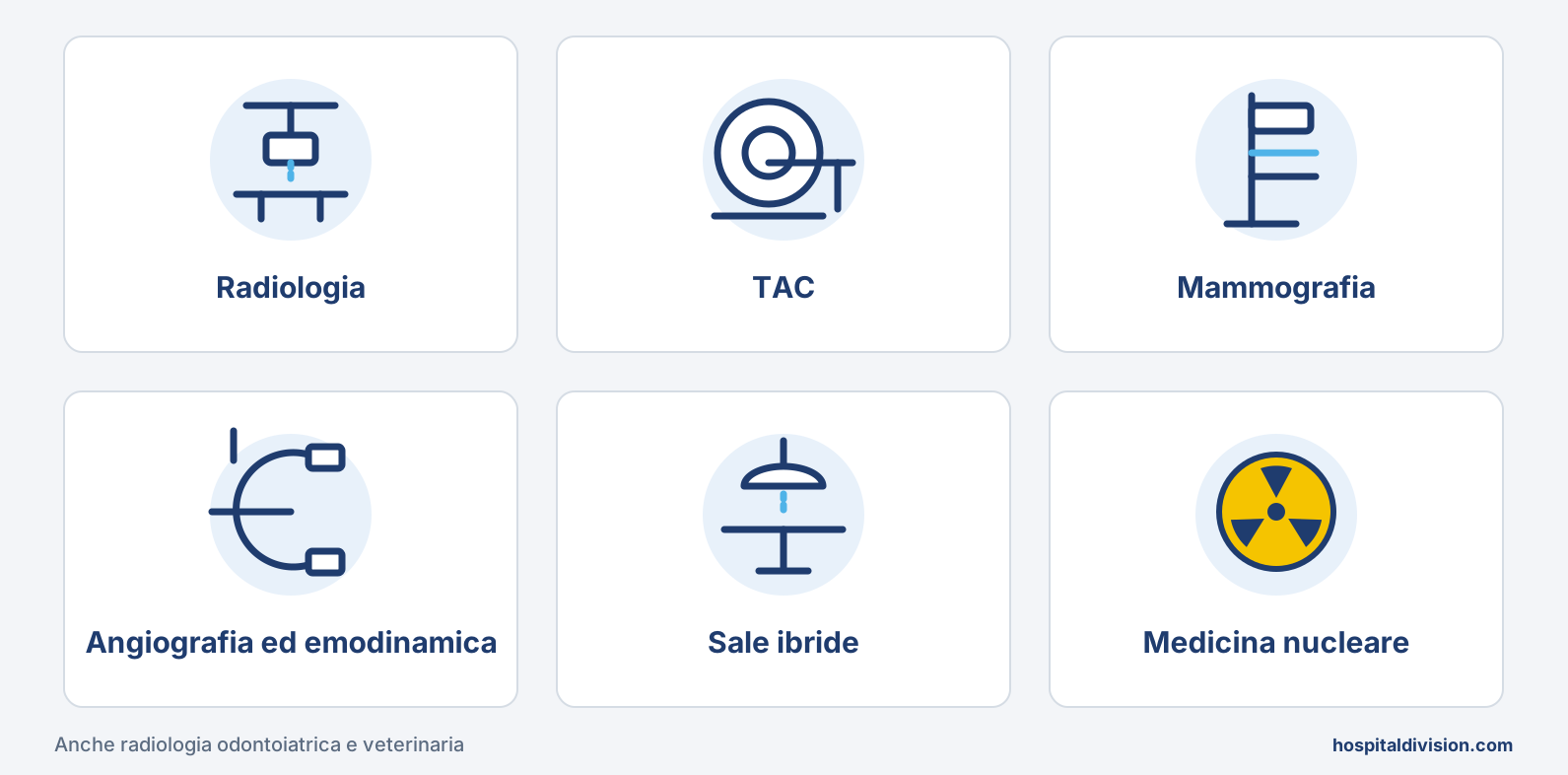
Each setting has different needs for protection, traffic frequency and hygiene. A door for an outpatient radiology room has different requirements than that of a hybrid room, which must also ensure the performance of an operating theatre.
Equivalent lead thickness: who sets it
The shielding of an RX door is expressed in millimetres of lead equivalent (mm Pb). The value is not chosen from a catalogue: it is set by the radiation protection expert with the shielding calculation required by Legislative Decree 101/2020.
The calculation takes into account several factors:
- type of equipment and operating voltage
- room workload
- distance from the source
- use and occupancy of adjacent rooms (corridor, waiting room, office)
Within the same department, two rooms may therefore require different thicknesses. The door must have at least the same lead equivalent as the wall in which it is installed, over the entire surface: leaf, frame, overlaps and stop areas.
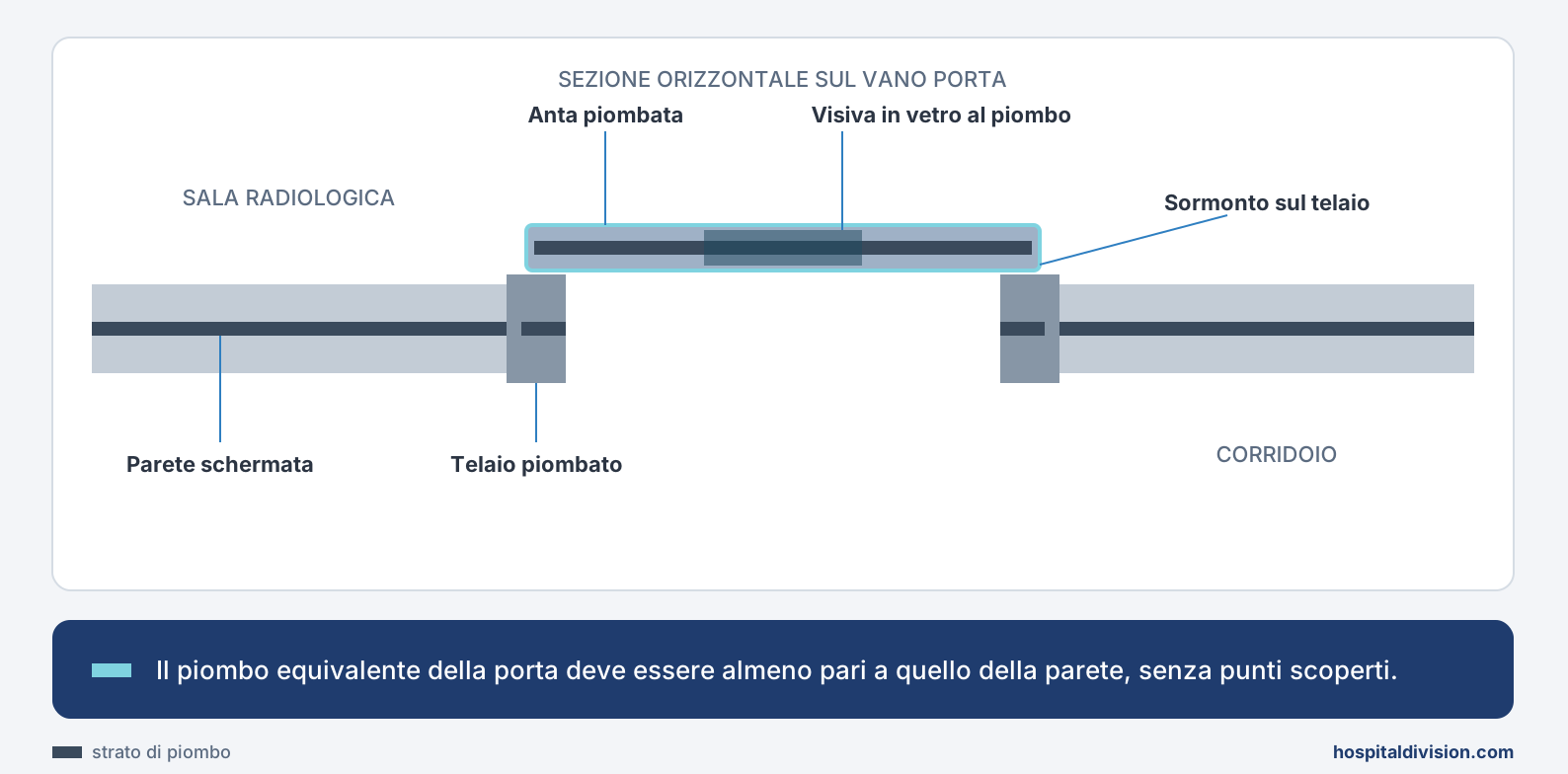
In the specifications it is good practice to always state the Pb mm value required by the calculation and ask the supplier for documentation certifying the door’s actual protection.
Sliding or hinged lead-lined?
The choice depends on available space, traffic flow, and the level of automation required.
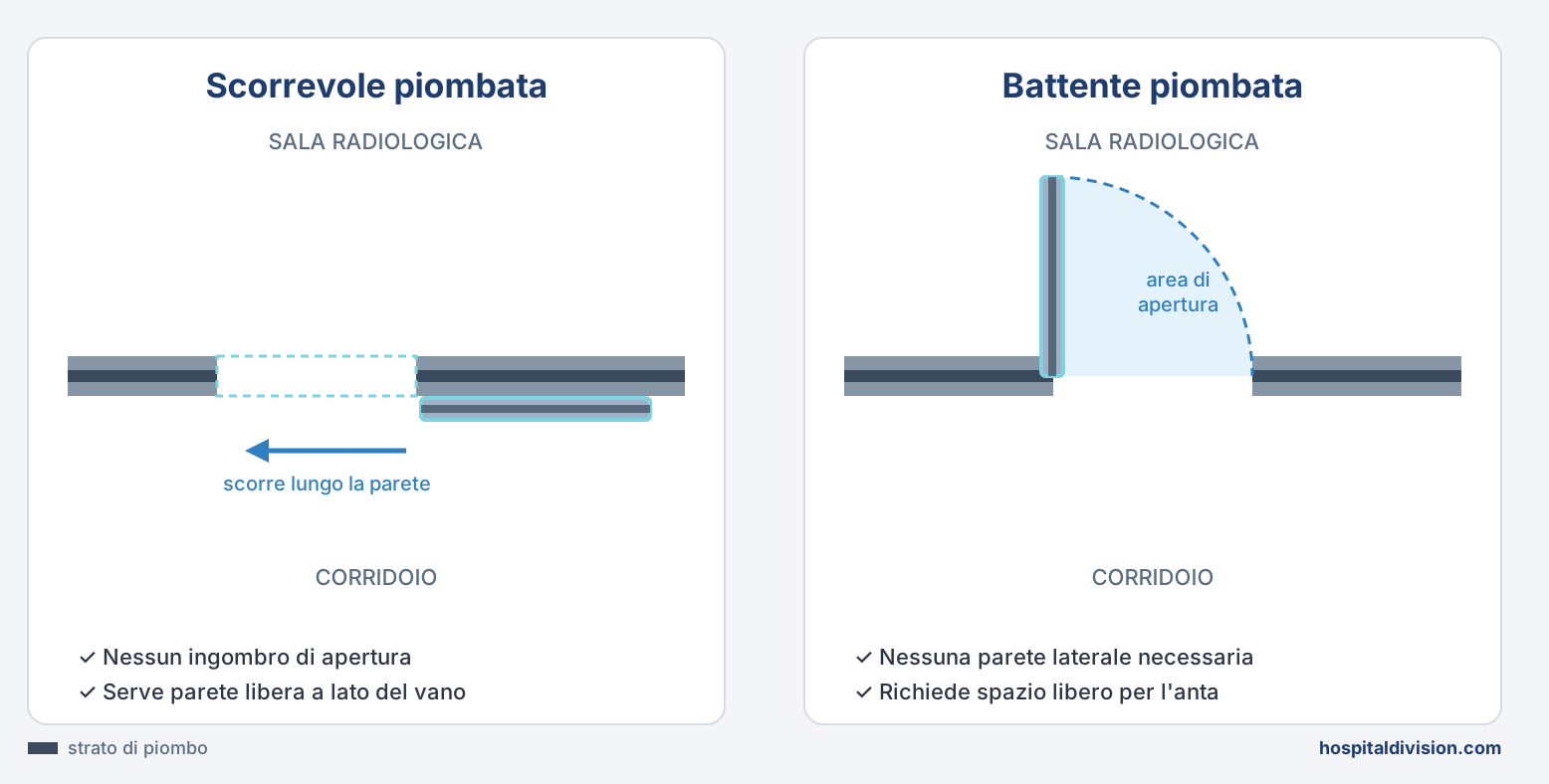
- Clearance: the sliding door has no opening clearance in the room or corridor, but it needs a free wall on the side. The swing door needs space for the leaf opening arc.
- Stretcher and bed passage: the sliding door is ideal with wide openings and frequent passages. The swing door is suitable, with a single or double leaf.
- Automation: on sliding doors it is very common and simplifies flow management. On swing doors it is possible with a swing-door operator.
- Leaf weight: on sliding doors, trolley and track support even very heavy leaves. On swing doors, hinges and frame must be sized for the lead weight.
- Typical use: the sliding door is used in CT rooms, angiography suites, hybrid rooms and high-flow radiology areas. The swing door in diagnostic rooms, technical rooms and clinics.
With lead, weight matters: a shielded leaf weighs much more than a traditional door. With wide openings, the automatic sliding door is often the most practical solution for staff and more durable over time.
Lead-lined airtight doors: when you need both performances
In some settings shielding is not enough: you also need airtightness, to maintain the pressure gradient between the room and nearby areas. This is the case for:
- hybrid rooms and operating theatres with intraoperative imaging
- angiography and hemodynamics rooms with high asepsis requirements
- nuclear medicine rooms where airflow must be controlled
In these cases the door must combine two performances: the lead equivalent required by the radiation-protection calculation and the airtightness required by the MEP design. Both requirements must be stated together in the specifications, because they affect the door’s construction, gaskets, weight and automation.
We explored the topic of airtightness in Single-seal doors vs airtight doors: differences and in Airtight sliding door for operating room: technical guide to choosing.
Viewing panels, finishes, automation and safety
Lead viewing panels. The windows in the door leaf allow the room to be checked without entering. They must be lead glass, with the same shielding as the leaf, and installed so as not to leave any unprotected points along the perimeter.
Finishes. In healthcare settings, surfaces must be smooth, durable and easy to sanitize: HPL laminates, stainless steel, antibacterial coatings. Edges and gaps where dirt can build up should be avoided.
Automation. Automatic X-ray doors integrate with the department’s workflows via elbow buttons, touchless sensors, remote controls or console commands. Automation must comply with UNI EN 16005 and be sized to the actual weight of the lead-lined door leaf.
Signage and safety. Often the door is connected to the “X-rays in use” light signage and to the interlock systems required by the radiation-protection design. Safety sensors and emergency opening functions complete the equipment.
Common errors in specifications
- Stating "lead-lined door" without the value in mm Pb. Without the shielding calculation data, bids are not comparable.
- Shielding only the leaf. Frame, overlaps, vision panels and fixing points must ensure the same protection.
- Not considering the weight. Automation, hinges, guides and the supporting wall must be sized for the actual lead-lined leaf.
- Forgetting the sealing. In hybrid rooms and controlled-contamination areas the door must also be airtight.
- Overlooking the flows. Clear opening and opening type must be chosen based on stretchers, beds and equipment in transit.
- Not coordinating the connections. "X-rays in use" signage, interlocks and controls must be planned with the electrical contractor.
In summary
A well-chosen lead-lined X-ray door starts from the radiation shielding calculation and fits the department: opening type, any sealing, viewing panels, finishes and automation. Defining these items in the specs avoids site changes and ensures the protection required by the design.
Do you have an ongoing project?
We will send you the spec item and the technical datasheet for the X-ray door suitable for your room. Write to us at info@hospitaldivision.com.